01
July 2026
Global rate outlook eases as oil prices retreat

Adriaan Pask
Chief Investment Officer, PSG Wealth
The recent reversal in oil prices is reshaping the global interest rate narrative. Rather than signalling the start of a new inflation cycle, the latest spike in energy costs increasingly appears to be a temporary disruption to the broader disinflation trend. Softer oil prices, slowing growth and easing inflation expectations are pushing long-term bond yields lower and reducing pressure on central banks to tighten further.
That shift is making the Federal Reserve (Fed) increasingly difficult for Wall Street to predict, with views diverging sharply on the direction of monetary policy. Markets may be overestimating the likelihood of further rate increases, particularly as the Fed’s latest projections were compiled before much of the recent fall in oil prices had filtered through to the outlook. With energy costs retreating and growth momentum moderating, the case for additional tightening looks less compelling than it did only a few weeks ago.
The broader market implication is that the recent move in yields may be less about renewed inflation risk and more about reassessing how persistent those pressures are likely to be. If oil prices remain subdued and growth continues to soften, the higher-for-longer narrative becomes increasingly difficult to sustain. This should help anchor long-dated bond yields and reduce the volatility that has characterised rate expectations in recent months.
The Fed is likely to keep rates unchanged for now, allowing recent developments in oil prices and inflation to filter through before shifting towards easing from early 2027. For bond markets, this should reinforce the recent improvement in global yields and reduce pressure around the prospect of a prolonged tightening cycle. In effect, a pause now appears more likely than another hike, with the balance of risks gradually shifting towards eventual policy easing.
South Africa is also likely to benefit from the more favourable external backdrop. Lower oil prices should help contain imported inflation, while softer global yields provide support to domestic fixed income markets. The improvement in the global inflation environment also reinforces the case for a more constructive outlook on South African rates.
Dr Rashad Cassim, deputy governor of the South African Reserve Bank (SARB) and Monetary Policy Committee (MPC) member, recently highlighted that bringing inflation expectations closer to the new 3% target should allow the SARB greater flexibility to lower short-term rates, while reducing the risk premium investors require to allocate capital to the country. This comes as the country has seen a meaningful improvement in its rate environment, with both long- and short-term yields declining significantly. By early 2026, long-term rates had fallen below 9%, while short-term rates moved below 7%.
However, this progress was briefly interrupted by the Middle East crisis, as the resulting inflation shock pushed short-term rates higher than long-term rates, further moderating the steepness of the yield curve. Despite this setback, the broader trend remains supportive, particularly if global energy prices continue to stabilise.
Against this backdrop, the SARB is likely to keep rates unchanged in the near term following its recent tightening move, before resuming gradual cuts later this year if inflation remains contained. However, the outlook will depend on inflation expectations remaining anchored and the extent to which lower global oil prices feed through to domestic fuel prices.
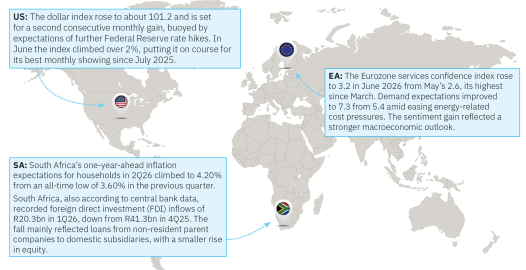
While the 2Q26 inflation expectations survey showed a rise in expectations compared with 1Q26, it was completed before the recent sharp decline in oil prices, suggesting the next survey may reflect a more favourable outlook. The MPC is therefore likely to acknowledge the temporary increase in inflation expectations while recognising the improvement in underlying inflation dynamics. In addition, the SARB will also continue to monitor broader financial conditions, including the effects of earlier rate increases on households, credit growth and economic activity.
The key point is that the recent move in oil prices should not be interpreted as the beginning of a fresh inflation upswing. Instead, it looks more like a temporary interruption to a wider disinflation process that remains broadly intact. A steadier oil price environment, slower growth and softer bond yields all point to less urgency for further tightening in both the US and South Africa.
Markets may therefore need to adjust to a more nuanced outlook: not a return to aggressive easing, but rather a transition from tightening pressure to a period of stability, followed by measured cuts once inflation risks have clearly receded. For now, the latest oil shock appears to be fading into the background rather than defining the next policy cycle.
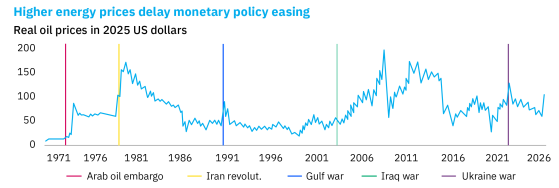 Source : World Bank
Bottom Line
Rather than signalling the start of a new inflation cycle, the recent rise in energy prices increasingly looks like a temporary interruption to the broader disinflation trend. As oil prices ease and growth softens, markets may be overestimating the need for further US interest rate increases, particularly as the Fed’s latest projections were compiled before much of the recent decline in oil prices. Against that backdrop, we continue to expect the Fed to hold rates for now before beginning to ease from early 2027, while the SARB should be able to keep rates steady in the near term and resume gradual cuts later this year.
Macroeconomics in brief
Key Market Indicators
Select a tab to navigate
- Loading data...
- Loading data...
- Loading data...